

Corporate Accountability Desperately Needed Eight Years After Grenfell
On the anniversary of the Grenfell Tower fire, justice has not been delivered.


Our latest briefing, Corporate Accountability After Grenfell, argues that firms responsible for unsafe cladding should face unlimited fines and permanent bans from public contracts.
The report argues that the current legal framework fails to effectively hold companies to account for corporate negligence — leaving the door open for another disaster like Grenfell, which killed 72 people in June 2017. Despite damning findings from the Grenfell Inquiry — including allegations of “systematic dishonesty” and accusations of the manipulation of safety tests by firms such as Arconic, Celotex and Kingspan — criminal prosecutions remain pending, while the companies under investigation continue to profit from public contract deals.
Leela Jadhav argues that much tougher laws on corporate accountability are urgently needed in England. The report points to stronger due diligence laws already in place in the EU, France, Germany, Thailand and Norway.

Visit our website to read the briefing.
Read coverage of the report in The Guardian and Inside Housing.
Why We All Need the Nationalised South Western Railway to Work
Last month, the first renationalised South Western Railway service departed from Woking for Waterloo. Our Deputy Director, Sarah Nankivell, reflected on the challenges and stakes that come with this greatly anticipated move in an opinion piece for The Guardian.
Common Wealth’s research has shown that the economic case for rail nationalisation is clear. Now comes the harder task of making it work in practice. This requires courage to challenge vested interests, operational expertise to improve services and democratic innovation to ensure public ownership serves the public.
The prize is enormous: affordable, reliable rail transport that serves communities rather than shareholders. The risk is equally significant: discrediting public ownership for years to come. Labour must get this right.
Read the full piece at The Guardian.
Public Ownership of England’s Water Companies Could Cost Close to Zero
Our report, How to Clean Up Water, by Ewan McGaughey, argues for the feasibility of the immediate nationalisation of the water companies, widely supported by the public as YouGov polling shows.
The Government has repeated a claim from water industry lobbyists that nationalisation would cost £99 billion. Our report explains why the £99 billion figure is nonsense and demonstrates that the true and fair value in law to bring water into public ownership is close to zero.
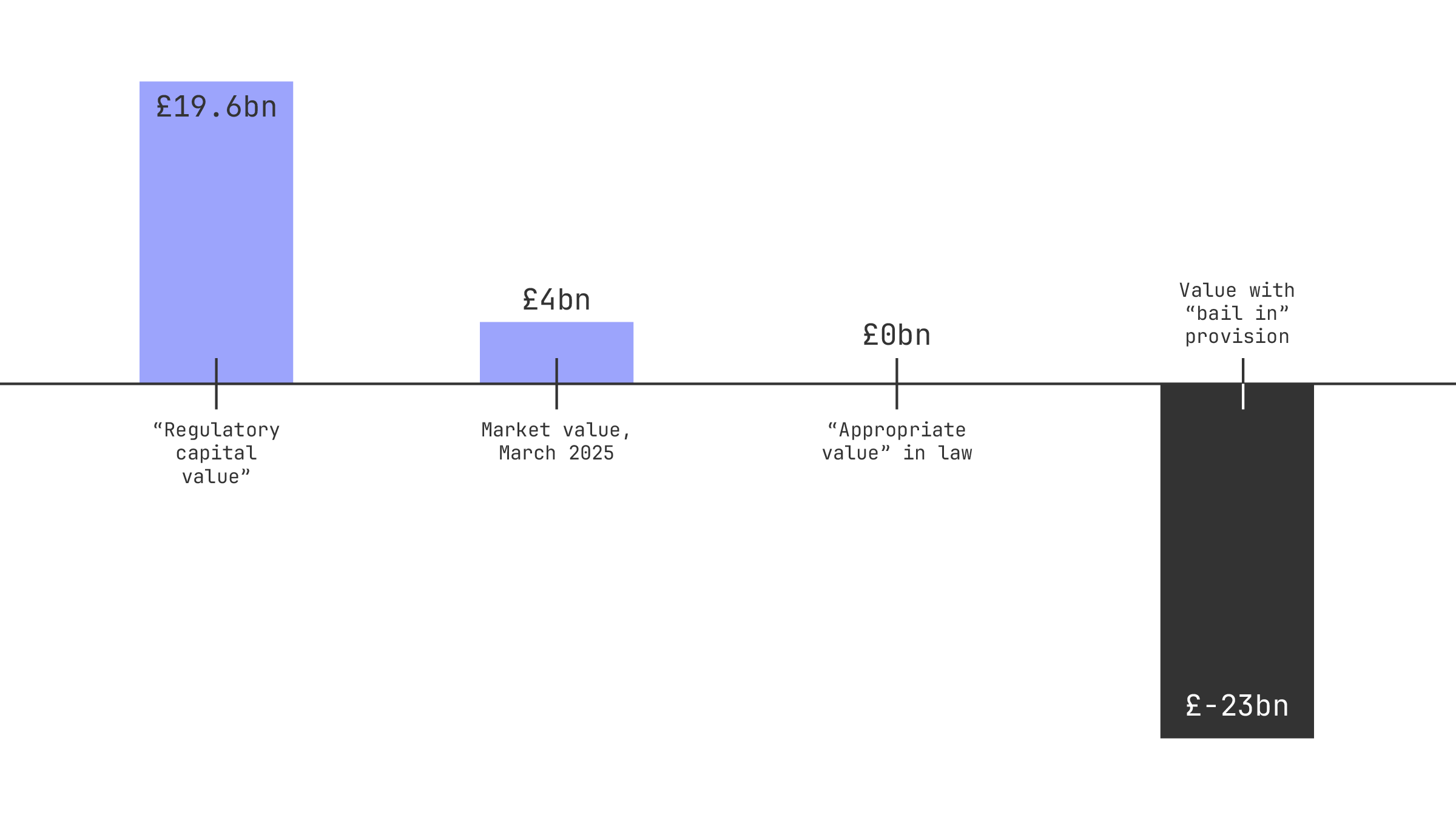
Visit our website to read the full report.
Read coverage of the report in The Guardian.
Energy Security Is Real Security
Responding to the Government’s commitment to raising its target from 3% of GDP spent on defence to 5% by 2035 this week, our team shared with The Guardian our findings that the anticipated increase in military spending to 3.5% of GDP (with an additional 1.5% of associated security spending) would cost the UK an extra £32 billion annually. That is enough in one year to fund the entire life cycle of 620 terawatt-hours of onshore windfarms, equivalent to 88% of the power Britain is projected to consume annually by 2050.
“Investing in renewables, environmental defences & council housing instead of more handouts to military contractors is the best way to make working-class households secure in a rapidly changing world.”
Khem Rogaly on X
Read coverage in The Guardian.